Getting there, timing and what to wear
Douro Valley day trip from Porto: plan it
How to get from Porto to the Douro Valley by tour, train or car, when to go, what to wear, and what the terraces, the river and the station tiles show.
See Douro Valley wine tours on GetYourGuide ↗Quick answer
From Porto, the simplest way to reach the Douro Valley is a guided day tour, with the transport and estate visits arranged. The alternatives are the Douro Line train, which follows the river to Pinhão and on to Pocinho, or a car, which rules out proper tastings for the driver. The valley lies east of Porto, so plan on most of a day. Summers are hot and dry and winters cold, so dress in layers.
Ways to reach the valley from Porto
There are three ways to reach the Douro from Porto: a guided tour with transport, the train, or a car. The tour is the simplest, because the route and the transport are arranged for you. The train follows the river for much of the way and is run by Comboios de Portugal. A car gives you freedom but means one person doesn't taste. Whichever you choose, the valley lies east of Porto, so allow most of a day, and settle your way back before you set out. If the valley is your only plan for the day, a tour also saves you from matching train times to estate visits.
The train along the river
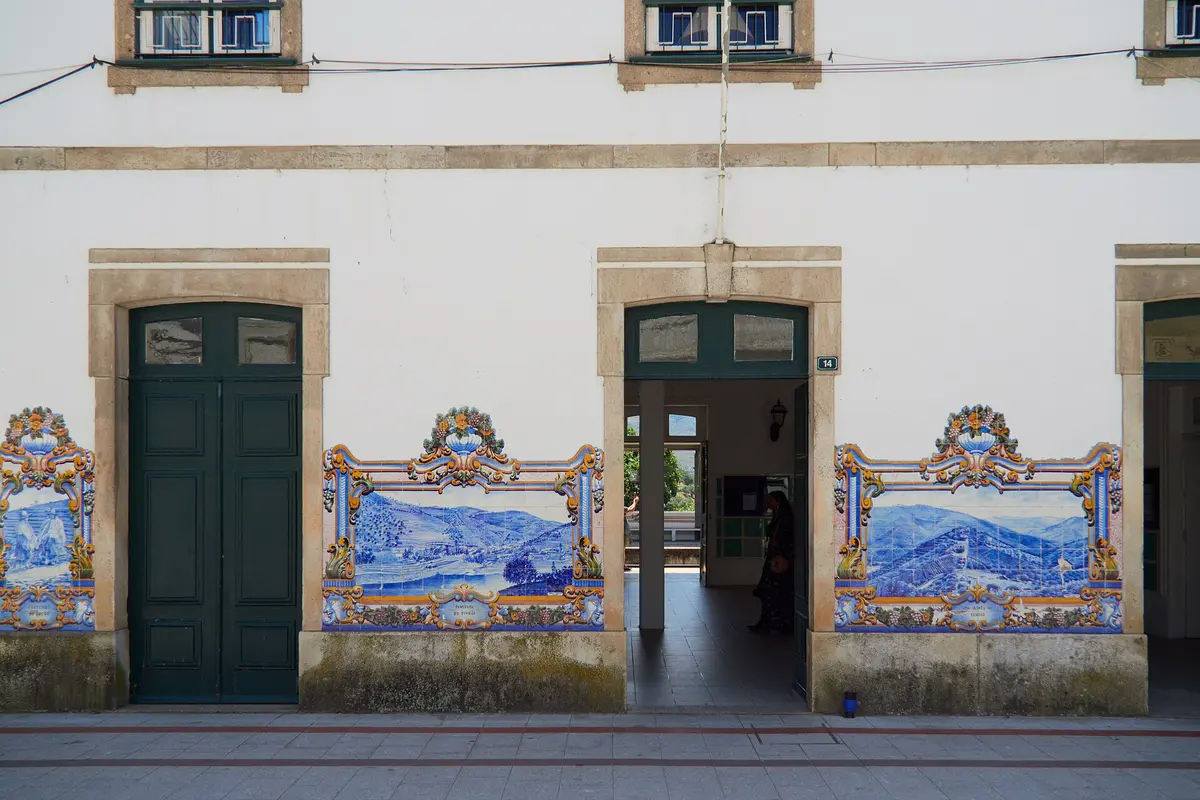
The Douro Line was built in stages in the late 19th century and now runs from Ermesinde, near Porto, to Pocinho. Along the way it serves towns such as Peso da Régua and Tua, and it reached Pinhão before it reached the Spanish border. Comboios de Portugal runs the passenger service, so timetables and tickets are on its site, and they change; this guide gives no times. The stations are in towns on the river, so if you want a specific estate, work out the last leg before you go, and ask the estate whether it takes visitors that day.
Pinhão's station tiles
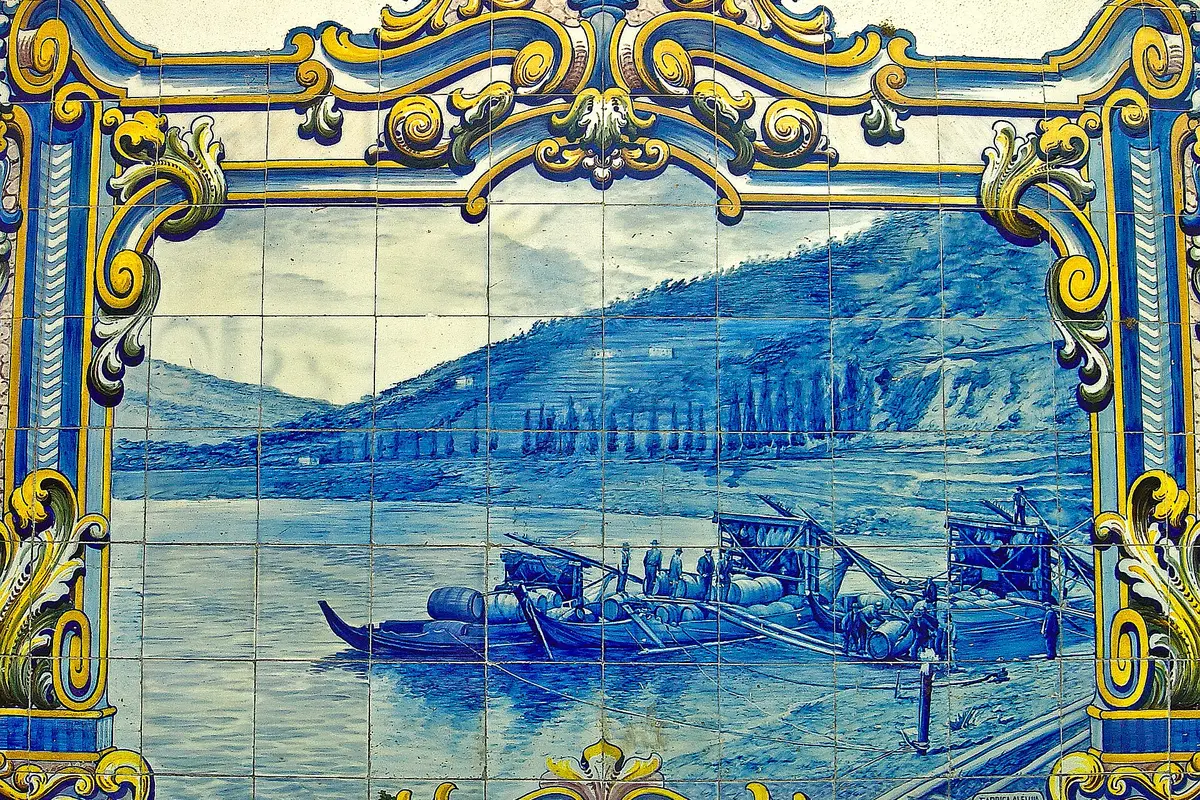
Pinhão station is known for its blue azulejo panels, which show Douro scenes tied to wine growing and were made by the Aleluia factory in Aveiro. This one shows rabelo boats taking on barrels at the riverbank, the way Port once left the valley. If your tour or train passes through Pinhão, the panels are worth a look. They sit on the station's walls and facade.
Read next: The Douro's Terraces, River and Railway, Explained
Driving yourself
Driving suits you if you want your own schedule and an estate you have chosen yourself. The slopes are steep, so expect winding roads, and remember that the driver can't take part in the tastings. If you plan to taste, share the driving or book a guide, and ask each estate whether it receives visitors without a booking. Another option is to stay a night in the valley instead of driving back after lunch, which turns the trip into more than a day.
When to go
The Douro sits behind the Marão and Montemuro mountains, which shelter it from Atlantic winds, and its climate is continental: hot and dry in summer, cold in winter. Spring and autumn fall between those extremes. Midsummer is the season to plan around the heat, with water, a hat and shade. The terraces are worth seeing in any season, but departures and estate visits vary through the year, so check your date in the booking calendar and read the confirmation for the time.
What to wear and bring
There is no dress code for a day among vineyards. Choose comfortable clothes you can sit in for hours, with layers, because a continental climate can swing between morning and afternoon, and a boat trip can feel different from the terraces. The hillsides are steeply sloping, so wear shoes with grip rather than smooth soles. You will carry whatever you bring all day, so keep it small, and since you will be tasting wine, bring water and a snack.
- Comfortable shoes with grip
- Layers for a long day with a boat trip in it
- A hat and sun protection in summer
- A bottle of water
- A small bag, not a large one
What you see: the terraces
UNESCO describes steeply sloping terraced vineyards covering some 24,600 hectares. The earliest terraces, from before the 1860s, are the socalcos: narrow, irregular strips held up by schist walls, with room for only one or two rows of vines. After the phylloxera attack the valley was rebuilt with longer, regular terraces, wider and slightly sloping so the vines get more sun. Between the vines you may spot orange groves, white-walled villages, farm complexes called quintas and small chapels on the hills.
Rabelos and the river
Before the railway, wine came down the Douro on rabelos, flat-bottomed wooden boats steered with a long timber at the stern. They carried it to the lodges at Vila Nova de Gaia, and their shallow draught suited the fast, shallow upper river before the dams. Dams with locks were built in the 1960s and 1970s, which made the river navigable for cruises, and Port wine is now moved to Gaia by tanker truck. Port companies still own rabelos, and you can see them along the river in Porto and Gaia.
Régua and the 1756 markers
Peso da Régua grew into the region's centre as the Port trade was centralised. After the 1756 demarcation, the Companhia Geral das Vinhas do Alto Douro marked the valley's vineyards with granite markers to regulate vineyards and wines. Régua is also a stop on the Douro Line. If your tour includes the town, you are standing where the old wine trade was run, and the river you see is the route the barrels took towards Porto.
Language, children and access
Guided tours run in set languages, shown on the booking page, so pick one you follow comfortably. Tastings are wine, and each tour sets its own rules for children, with a 'not suitable for' note. The same page shows whether a tour is wheelchair-accessible. The hillsides are steeply sloping, and boarding a boat can be hard with limited mobility, so write to the operator before you book if you are in doubt. Ask about group size too, since a smaller group can slow down for you.
Who this isn't for
A Douro day trip suits you less if you dislike long days of travel, because the valley lies east of Porto and tours fill most of the day. It is a poor fit for anyone who wants a slow morning in Porto first. If you don't drink alcohol, the tastings will be a small part of your day, and the scenery and the river become the reason to go. And if you want to walk the terraces for hours or visit many estates, a single day is too short, so consider a night in the valley instead.
Frequently asked questions
How do I get from Porto to the Douro Valley?
By a guided tour with transport, by the Douro Line train, or by car. The tour is the simplest because transport and estate visits are arranged. The train follows the river, and a car gives you freedom but the driver can't taste properly.
Is there a train to the Douro Valley?
Yes. The Douro Line, run by Comboios de Portugal, runs from Ermesinde near Porto to Pocinho and serves towns including Peso da Régua, Pinhão and Tua. Check the operator's site for timetables.
When is the best time to visit the Douro Valley?
Any season works, but the climate is continental, with hot, dry summers and cold winters. Spring and autumn fall in between. Tour calendars vary, so check your date in the booking calendar.
What should I wear for a Douro wine day?
Comfortable clothes, shoes with grip and layers. In summer add a hat, sun protection and water. The hillsides are steep, so avoid smooth-soled shoes.
How long is a Douro day trip from Porto?
Most of a day. The valley lies east of Porto, so travel takes a large share of every tour. The booking page shows the duration, so compare tours before you book.
Can children or wheelchair users join a Douro tour?
It depends on the tour. Each booking page shows its age rules, a 'not suitable for' note and whether it is wheelchair-accessible. Read them first, and write to the operator if you need more detail.
Sources